Tempinator
📁 Source code: View on GitHub →
As a lover of data and information, I wanted to get some realtime and historic information about the temperature in my various houses. Naturally, I started poking around for smart home solutions that can scratch that itch and integrate well with Home Assistant, but the number of rooms I wanted to cover required a fairly low price point. In 2020/2021 when I started this project, there simply weren’t *very cheap* options on the market, so I went about building one of my own!
The requirements were pretty straight forward:
-
Measure temperature
-
Measure humidity
-
Display current temp and humidity
-
Send the current readings off for storage
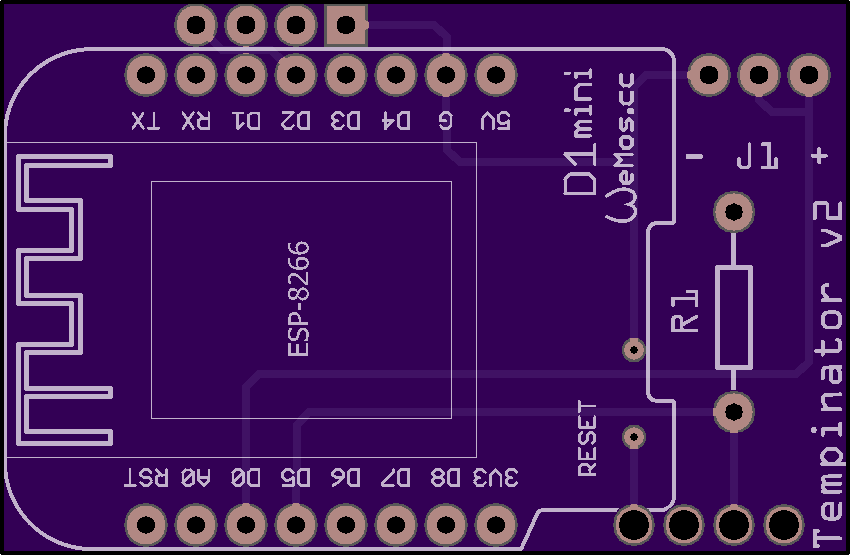
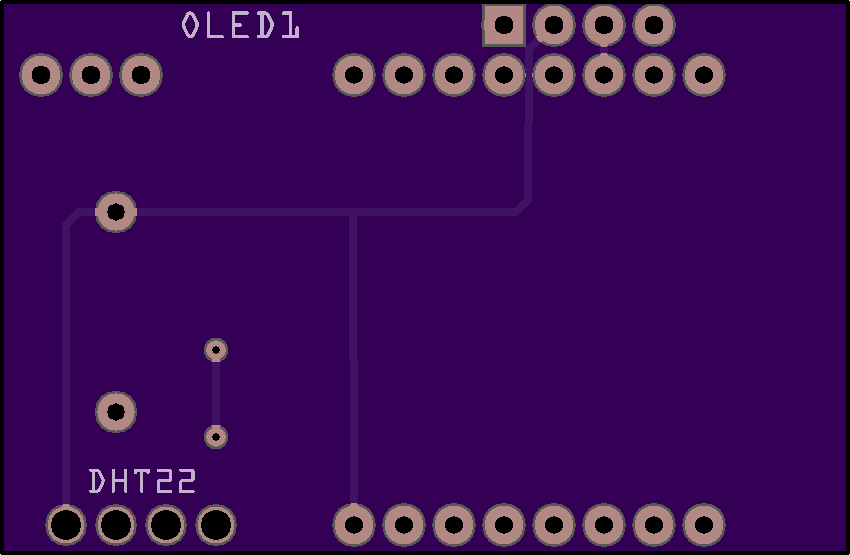
It started with the always popular and ever present ESP8266. I wanted something compact, so I went with a Wemos D1 mini form factor. I can’t remember what they ended up costing, but I purchased several for a pittance. I paired the devboards with the venerable DHT22 which can measure temperature and humidity as well as a small OLED screen to display the current readings and modeled up some enclosures for them to give them a nice finished look. Since I was on a kick building custom boards, I tossed something together in Fritzing and sent the design off to OSHPark for manufacturing. They turned out pretty great!
The ESP8266 doesn’t natively support any of the non-wifi smart home standards like Zigbee or Z-Wave so I needed to implement a wifi-based solution in software. I decided to stick with my tried-and-true Prometheus setup that I put together for faninator. In this case, since the devices are wired, I could have just used a standard scrape configuration and skipped the usage of pushgateway - but laziness won out. The net result for this guy is pretty straight forward: it reads the current temperature and humidity, sends them off to pushgateway, and sleeps for 30 seconds to repeat the loop.
Since that time, the THIRDREALITY Zigbee based sensor has been on sale several times and has eventually replaced this project across the board. It was an easy call to make because the newer sensors implement all of my requirements with the benefit of being battery powered.
Circuit Boards
Models
The models were not especially radical - I just wanted something that looked relatively decent and finished. The practical bits that came into play are:
-
Expose the DHT22 to ambient air as directly as possible
-
Ensure the OLED screen is visible without excessive “dead” space
-
Allow access to the ESP8266 for maintenance or replacement if needed
What made the model a bit of a bear to build was the fine tuning needed to fit the assembled parts AND ALSO offer tolerances for the fact that each was manually built and not perfectly consistent. I assembled all of the boards and ran a test fit of each one in the prototypes until they all passed muster.